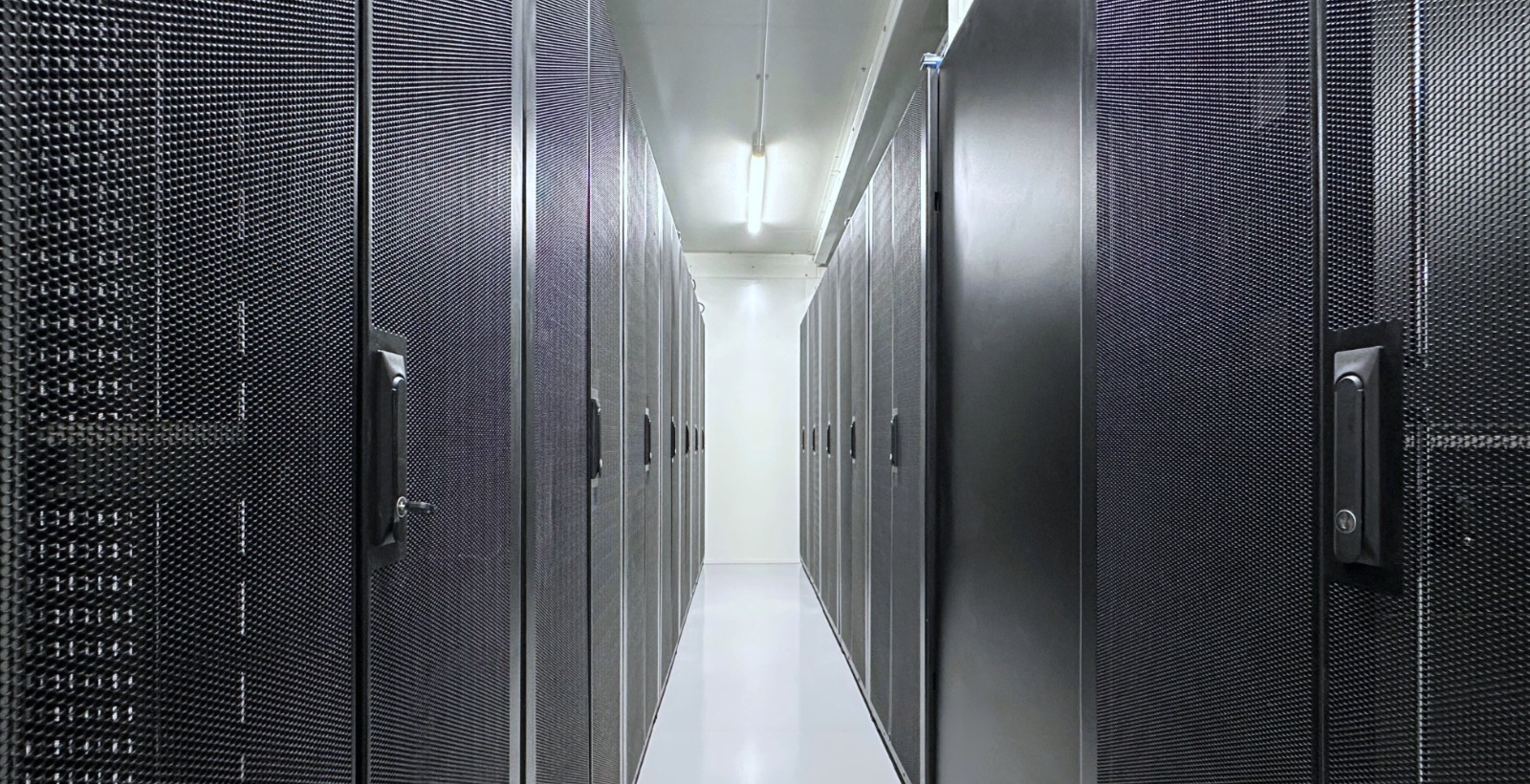
Power Usage Effectiveness (PUE) Calculator for Data Centres
Power Usage Effectiveness (PUE) is a globally recognised metric for measuring data centre energy efficiency. It provides a clear and comparable way to understand how effectively a data centre uses power to support critical IT hardware, relative to total facility energy consumption.
As energy costs rise and sustainability expectations increase, PUE has become a critical performance indicator for operators, colocation providers and enterprise infrastructure teams seeking to optimise efficiency, reduce operational expenditure and meet environmental targets.
What is PUE?
PUE is calculated by dividing the total amount of energy used by a data centre facility by the energy consumed by IT equipment alone. This metric provides an indication of how efficiently the facility uses energy, with a value closer to 1.0 representing greater operational efficiency and less energy wasted on supporting infrastructure such as cooling and power distribution systems.
This provides a clear measure of how efficiently power is being delivered to IT systems, helping operators understand how much energy is supporting computing workloads versus cooling, power distribution and other supporting infrastructure.
Please use our PUE calculator above to assess your data centre energy efficiency today. If you would like expert guidance on how to enhance your operations, reduce energy consumption and improve overall efficiency, please get in touch with our team.
Contact us on 0844 225 0094 to book an exploratory meeting or click below to fill in our contact request form:
Discover what our data centre consultancy services can offer.
Understanding PUE Benchmarks
Understanding good Power Usage Effectiveness benchmarks requires consideration of data centre design, climate and operational maturity. Infrastructure efficiency, cooling strategy and geographic conditions all directly influence achievable performance levels.
- Legacy data centres often operate between 1.8 and 2.5
- Modern enterprise facilities typically achieve 1.4 to 1.6
- Highly optimised, hyperscale environments can reach 1.1 to 1.
Modern, well managed facilities in favourable climates typically record lower PUE values than legacy environments constrained by ageing systems or warmer conditions. Consequently, PUE should be interpreted within its technical and environmental context rather than treated as a universal benchmark.















Why PUE Matters for Modern Data Centres
Improving PUE delivers measurable business and environmental benefits, including:
- Reduced energy costs and lower long term operating expenses
- Improved sustainability performance and carbon reduction
- Better capacity planning and infrastructure utilisation
- Increased transparency for customers and regulators
- Alignment with ESG, net zero and compliance objectives
For organisations operating at scale, even small improvements in PUE can result in significant cost savings and emissions reductions over time.
FAQs
Can you help improve my PUE?
Yes! We provide expert guidance on optimisation strategies including cooling efficiency, power distribution and infrastructure upgrades. Our approach focuses on identifying inefficiencies, recommending practical improvements and supporting implementation to reduce energy consumption, lower operating costs and improve overall data centre performance.
Does lower PUE always mean better performance?
Not necessarily. While a lower PUE indicates higher energy efficiency, it does not always reflect overall data centre performance. Factors such as resilience, redundancy and uptime requirements must also be considered.
For example, highly resilient environments with additional backup systems or strict cooling tolerances may operate with a higher PUE by design. PUE should therefore be evaluated alongside operational priorities and service levels rather than viewed as a standalone measure of performance.
Can PUE be improved without major infrastructure changes?
Yes, substantial improvements such as airflow optimisation, temperature setpoint adjustments and better monitoring can deliver measurable gains. By engaging a data centre maintenance specialist, you will benefit from seasonal optimisation of mission critical systems.
Why does my PUE differ from other facilities?
PUE varies based on infrastructure, cooling design, utilisation and climate. It should always be interpreted within your specific operational and environmental context.
For tailored guidance, please get in touch with our specialists today by calling us on 0844 225 0094.
Will improving PUE reduce costs immediately?
What is DCiE and how does it relate to PUE?
Data Centre infrastructure Efficiency (DCiE), is closely related to PUE but provides an alternative view of energy performance.
While PUE measures the proportion of total energy used for overhead, DCiE represents the share of energy consumed directly by IT equipment. Offering a clearer indication of how effectively power is being used for computing operations.
-xx3dff.jpg)
Checklist For Your New Server Room Project!
There are so many factors to consider when exploring the best way to effectively design and keep air conditioned. From the layout of space (low ceilings and raised floors etc.), the extent of cooling needed, the level of environmental monitoring required, the best system of fire suppression, the list goes on.
Designing a new server room at first may seem to be an intimidating project, there are after all, a lot of factors and standards to consider. However, setting up the space and equipment doesn’t have to be an ordeal – that’s if you plan and make sure you have all necessary components. We have made you a simple checklist to facilitate the design of your server room.